Achilleion Museum in Corfu
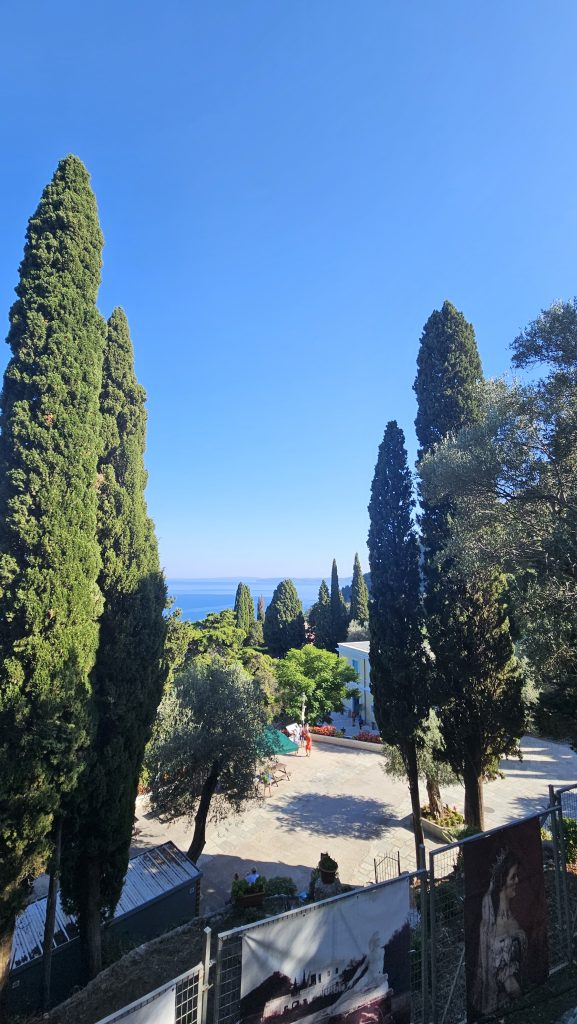
The Achilleion Palace was built from 1888 to 1891 by the Italian architects Raphael Carito and Antonio Landi, commissioned by Empress Elisabeth of Austria. The palace is located near the village of Gastouri.
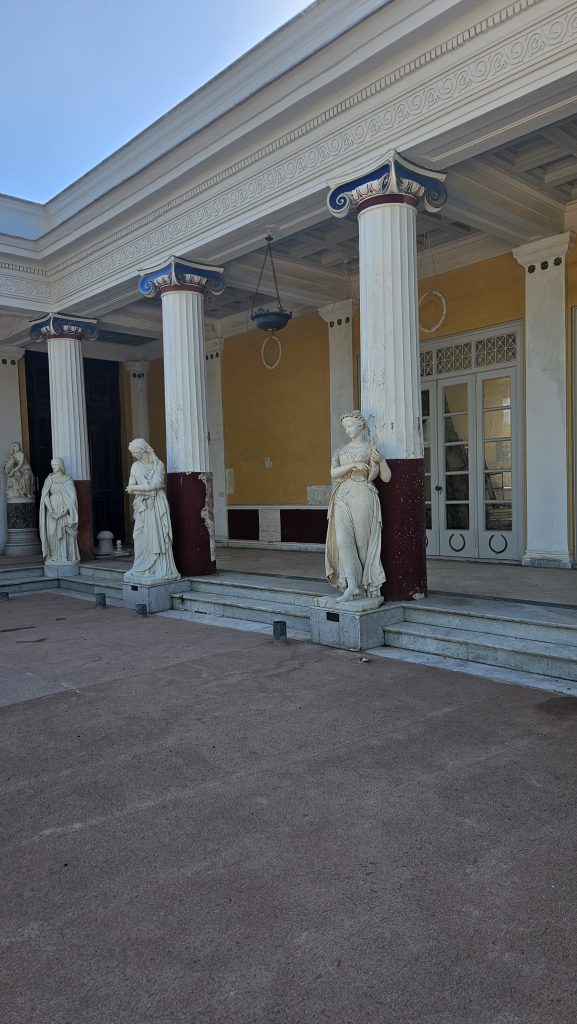
Ionic, Roman, and Doric styles were used in the palace's construction. The Empress named her palace after her favorite ancient Greek hero, Achilles, whom she greatly admired. The total cost of the palace's construction was 18 million francs.
Elisabeth (also known as Si-Si) sought peace and relaxation in Corfu after the tragic death of her son, Rodolfo. She designed the palace's decorations, murals, style, and statues to be exclusively themed on ancient Greek and mythological themes. The palace houses a collection of paintings by Italian and Austrian artists, but the most impressive is "The Triumph of Achilles" by Franz Matz. It depicts Achilles on his chariot, dragging the slain Hector against the backdrop of the walls of Troy.
The rooms contain personal belongings of Elizabeth of Austria and the German Kaiser Wilhelm, furniture, jewelry, and more. Statues of figures from ancient Greek history and mythology, as well as portraits and ceramics, are also on display.
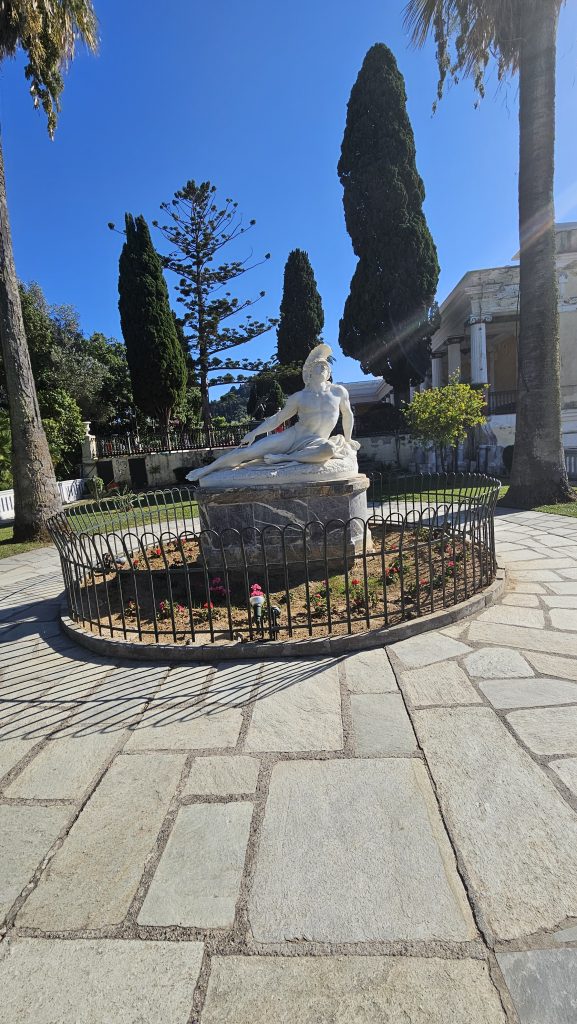
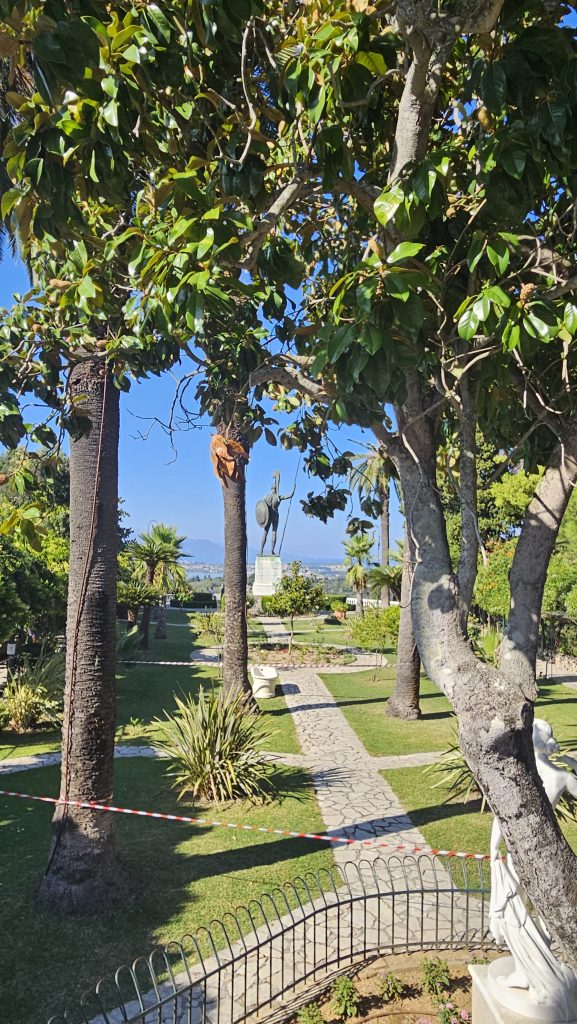
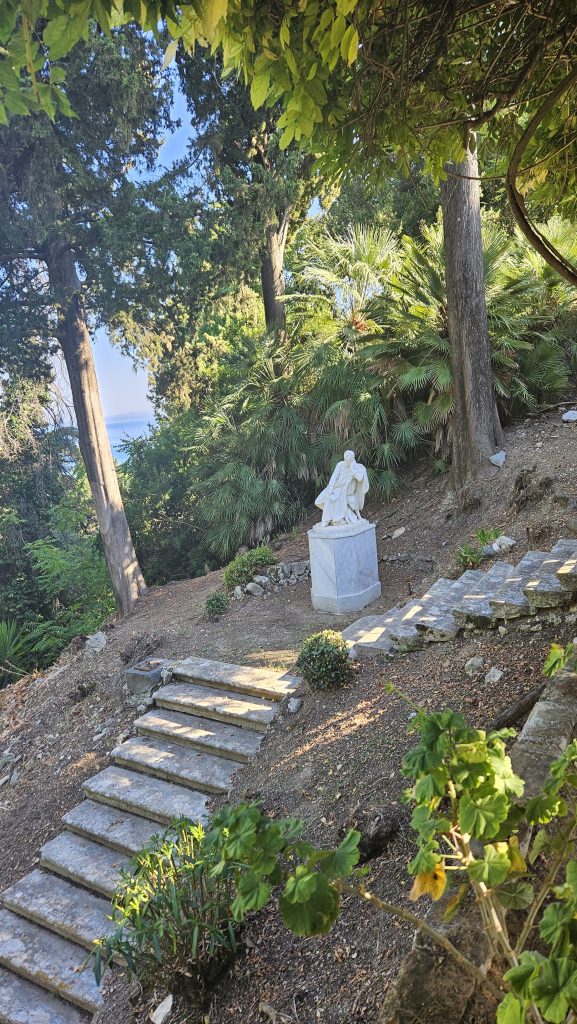
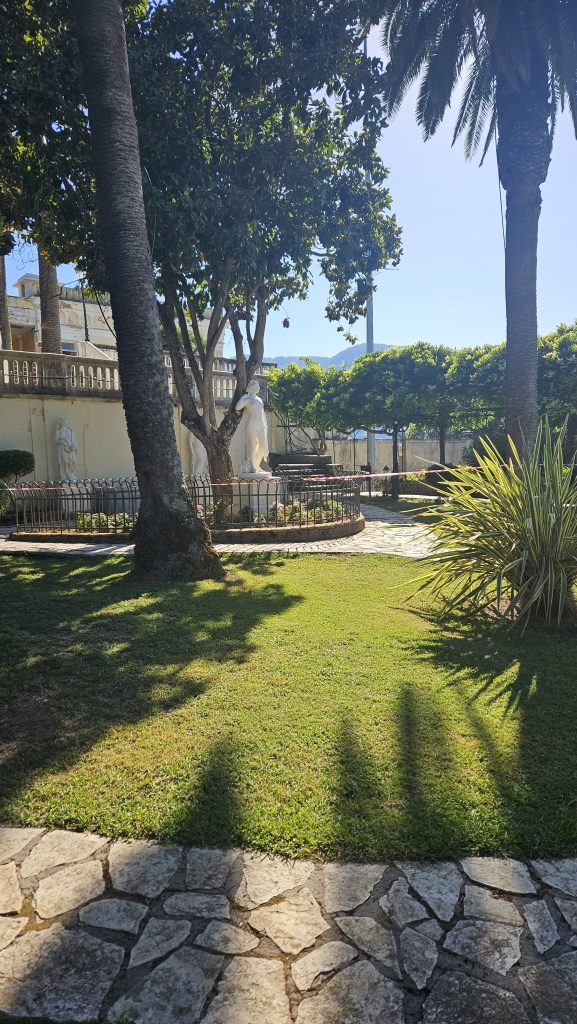
At the entrance to the palace is a Catholic chapel, impressive in its beauty. The fresco under the chapel's dome depicts Jesus Christ in the Praetorium, on trial before Pontius Pilate (the Judgment of Christ). Under the dome is an icon of the Holy Mother of God by Franz Matz. The palace gardens include the unique Courtyard of the Muses, featuring sculptures of the Three Graces, the god Apollo, and the nine muses purchased by Elizabeth from the Villa Borghese. The famous cultural masterpiece, "Dying Achilles," was created by the German sculptor E. Henter. The impressive 11-meter-tall copper sculpture "Achilles the Victorious" by the sculptor Goetzp was installed by Kaiser Wilhelm.
After the Empress's death in 1898, the palace remained closed for nine years until it was purchased by the German Emperor William II in 1904. The Kaiser made changes both inside and outside the palace: two statues of Achilles were removed, and a building called the "House of the Knights" was constructed. He also landscaped the gardens around the palace and erected a monument to Elizabeth. In 1914, the Kaiser was forced to leave for Germany. After Germany's defeat in World War I, the Achilleion Palace passed into the possession of the Greek state.
During World War II, the palace housed a hospital and headquarters. After World War II, the palace was used for government services. In 1962, a casino opened on the second floor of the palace. Since 1990, the palace has served as a museum.
The Achilleion Museum is open year-round from 8:00 a.m. to 8:00 p.m. in the summer and until 3:00 p.m. in the winter.